
Five weather drone facts
By Theresa Barosh | Feb. 2026
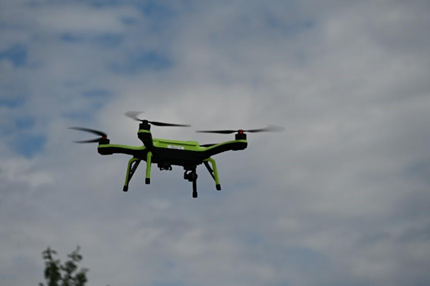
In a recent interview, NOAA Administrator Neil Jacobs, Ph.D., spoke to what NOAA may look like in five years. Jacobs said there would be more use of autonomous vehicles, such as drones deployed from hurricane hunters.
CSU researchers have conducted multiple projects using weather drones, so shared some fun facts based on their research experiences:
- Drone sensors can measure wind, temperature, atmospheric pressure, relative humidity/water vapor, and particulate matter depending on how they are equipped. Some weather drones also collect filter samples for analysis in the laboratory.
- Researchers typically use remotes to control weather drones, or their paths can be pre-programmed using GPS.
- Drones have gyroscopes and accelerometer sensors to help with stability and orientation. Staying stable can get especially tricky in the wind and rain. Take-off and landing can also be challenging from unstable surfaces, such as boats or planes.
- Drones commonly use lithium-polymer batteries that are lightweight.
- Some drones, particularly those manufactured in the U.S., are made of 3-D printed plastic. This can splinter easily, though 3-D printing can result in lightweight material and versatile shapes. Current policies limit use of foreign-made drones in federally funded projects.