
Education Perspectives: Celebrating three decades at CIRA
By Theresa Barosh | Sept. 2025
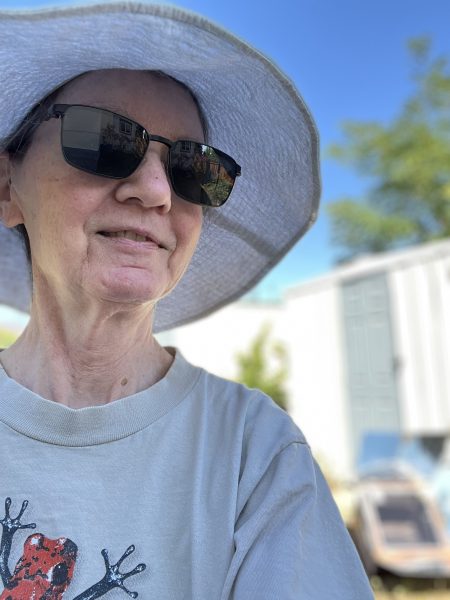
After 30 years at CIRA, Senior Research Associate Bernie Connell celebrates her retirement this month. Connell supported forecasters, managers and decision makers with trainings on satellite products in the national and international communities during her time at Colorado State University.
“Besides class and online learning, we learn from other people, events and processes,” said Connell. “I’ve seen that happen when we have workshops. People share information and then someone will say ‘I haven’t thought about that from this different perspective.’ We then take that concept, tweak it and apply it to a different situation or area and then report back on the success or failure of the endeavor. That’s when group dynamics shine – when we share ideas in a welcoming environment and the group benefits from the exchanges.”
Connell works to make trainings a place where questions and ideas flow freely. She wants people to leave with transferable problem-solving skills. Every forecaster is going to run into unique circumstances and situations unlike what they trained on. If they can critically think about resources – like models, satellite products and other available information – Connell said they are more prepared to be able to work through new challenges that arise.
“I have found that in the most successful communities, people listen to each other,” said Connell. “Listening and being able to understand the situation from a different perspective – that is what helps us adapt to changing problems in meteorology. Because we can’t measure everything, all the time, everywhere, there are still going to be things that surprise us.”
A Message from Director Steven Miller
Bernie has always been a strong champion for the core values we continue to share across our CIRA community—access, inclusion, equity, respect, professionalism and a trust that is earned through a demonstrated, sustained and sincere commitment to uplifting the people of our field and to supporting each other. When it comes to training our community’s users of satellite information (both domestic and international partners), Bernie has led a powerful and effective team. I have great confidence in those who will continue and expand upon her work, having learned from one of the very best. Through her ability to provide clear communication, impactful examples, and a genuine interest in helping people, Bernie’s career is an important reminder to us all to stay passionate about what we believe in and let that shine through in our work, as well as our daily walk. I am thankful for overlapping with Bernie during her tenure here at CIRA, and wish her good luck and bountiful harvests from her garden for many years to come!
Inspiration
Getting exposure to summer Math and Biology programs through the University of Wyoming during high school particularly helped Connell find her career path. She came west from Pennsylvania after a supportive science teacher encouraged her to apply for the program. Bernie’s parents worked to make sure their children had the opportunity to attend college, an opportunity that they did not have. Bernie said research experiences for high school and undergraduate students do make a difference.
Bernie started out in Forest Management from Colorado State University in 1982, followed by an MS in Natural Resources – Air Environment from CSU in 1988.
“I first started out in forest management, and was exposed to meteorology by working for Forest Service Research meteorologists,” said Connell. “I was intrigued by Remote Automated Weather Stations (RAWS) and field work studies where they released weather balloons and looked at airflow around mountains.” In 1997, she received a PhD in Natural Resources – Plant and Boundary Layer Environment from the University of Connecticut.
Cuts in the Forest Service forced Bernie to look for other job opportunities and she applied to one at CIRA.
At CIRA, she worked with both the national and international communities since 1996 to promote the use of satellite imagery. She is particularly proud of the growth of the Central and South America and the Caribbean communities in the use of satellite imagery and products.
“There are many wonderful satellite products that help us explore, evaluate and predict the weather of our environment,” said Connell. “The questions are: do the forecasters, managers, and decision makers know about them and how to use them optimally? What are the most effective ways to get the information to them?”
Answers to these questions can depend on the location, available resources and other factors. Throughout trainings, Connell worked to keep the context of those attending in mind.
As opportunities arose, Connell also pursued research related to regional satellite cloud climatologies and research to develop satellite products using multispectral and hyperspectral imagery for the detection of volcanic ash and aerosols, dust, and the detection of fires as well as improved detection of water and ice clouds.
Solar Cooking
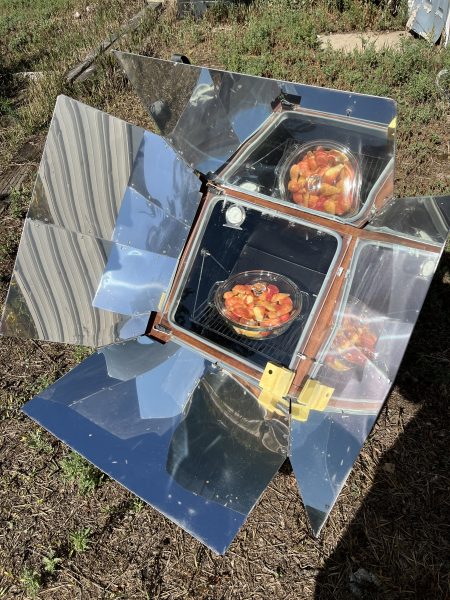
Connell uses satellite imagery when planning for one of her favorite hobbies: solar cooking. The activity goes best with clear, sunny skies so Connell checks the forecast and satellite products to plan out her next solar cooking session. In fact, Connell gets excited to pull out the solar oven when a forecast of severe clear comes along as it did on Labor Day.
Solar cooking works through the sun’s energy. A solar oven has reflectors and glass plates that harness solar radiation without using gas or electricity. Connell uses her solar oven for baking, boiling and other food preparation that requires heat. She uses it in her backyard, especially through the summer months when turning on an oven inside holds little appeal.
Connell has used the solar oven for demonstrations during outreach events for K-12 students. Recalling a student who recognized her years later after a demonstration, Connell said she values what these kinds of hands-on learning experiences can mean to students. Throughout her career, Connell has demonstrated a deep commitment to education.
“There’s a lot of heartfelt moments where you can really see the impacts and at the same time you also have to be patient with training in terms of building the capacity,” said Connell. “So, it’s been nice to have a longer time here at CIRA because I’ve seen changes for the positive.”