
CIRA researchers support data processing for NASA Earth-Observing Satellite Missions
By Theresa Barosh | July 2025

An expert team at CIRA will manage, process and distribute the daily terabytes of data the NASA INCUS, or Investigation of Convective Updrafts, satellite mission will collect. CIRA began developing the data processing center for INCUS in 2021.
“The nice thing about this particular collaboration is that it exemplifies how CIRA can connect across different federal agencies,” said CIRA Director Steven Miller, “Things that we learn from the NASA INCUS mission will no doubt help NOAA in future characteristics of tropical weather. This synergy between the different agencies is really exciting – for a cooperative institute to be in that role where we can straddle the fence between the agencies, the disciplines and the needs.”
INCUS is currently on schedule for launch in 2026 – and required to launch before August 2027. INCUS will include three spacecraft flying in formation to measure the vertical transport of air and water within clouds using cloud radars and a radiometer. This mission aims to improve our understanding of when, where, and why storms form, as well as why some develop severe weather while others do not. Mission lead, Colorado State University Distinguished Professor Susan van den Heever based out of the Department of Atmospheric Science, is the first woman-principal investigator to lead a NASA Earth Venture Mission.
As previously done with the NASA CloudSat mission, CIRA is collaborating with mission partners and the science team to build the data processing system that will generate global research products for the scientific community.
Building on NASA’s CloudSat Mission
From 2006 to 2024, CIRA operated the Data Processing Center for NASA’s CloudSat satellite mission. CloudSat used a cloud radar in low Earth orbit to observe the vertical distribution and properties of clouds on a global scale. In close collaboration with science team members from universities and NASA centers across the country, CIRA produced data products that significantly advanced understanding of cloud dynamics, precipitation and the atmospheric energy balance.
“In one case, we went to NASA and took NASA datasets – from the CloudSat mission – and used the CloudSat data to improve the three-dimensional characteristics of the clouds, so thereby improving the NOAA model, the NOAA algorithm,” said Miller. “And then the Navy got interested in it and they said, ‘hey, we would like to have this capability globally.’”
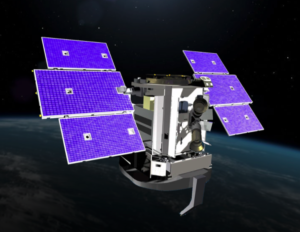
Then, CIRA started developing a global 3-dimensional cloud product.
“It’s a synergy between NOAA, NASA and the Department of Defense,” said Miller. “Now that it’s up and starting to run, INCUS comes along and says, ‘we need a certain kind of cloud information product.’ And we say, ‘hey, we can take this information from what we had done in these other projects and now apply it back to a NASA mission.’”
The research has almost come full circle in terms of starting with NASA observations and feeding back to another NASA mission.
Although the CloudSat satellite has now completed its operational life, CIRA and its partners are finalizing a comprehensive reprocessing of the mission’s data products, which will continue to support atmospheric research for years to come. CIRA also continues to contribute to the CloudSat science mission through analysis and improvements to data products based on measurements collected throughout the mission.
“We are producing improved estimates of how often precipitation falls on Earth, and where it falls, completing a scientific record spanning nearly two decades,” said CIRA researcher John Haynes. “We are also improving estimates of how much water and ice is contained in global clouds using synergistic measurements from other instruments in combination with machine learning techniques. Water, both in the form of precipitation and cloud drops, is an essential quantity to understand given its important contributions to the energy balance of the Earth system.”
Check out a CSU SOURCE story for more about the INCUS mission and CIRA’s role in data processing.
What is needed: Continued support of NASA so that interagency work can continue to benefit people.